Newsletter
Join the Community
Subscribe to our newsletter for the latest news and updates
Custom editorial illustration for this article. Not an Omoggle screenshot, product UI, or official asset.
Omoggle is not interesting because it can rate a face.
It is interesting because it turns that rating into a spectator sport.
In early May 2026, Omoggle moved from looksmaxxing internet lore into Twitch clips, X arguments, and platform-policy drama. The core loop is brutally simple: open a camera, pass an 18+ gate, get scanned, match against another person, win or lose, and climb an Elo-style ladder.
That is the part founders should pay attention to. Omoggle did not just build another face-scoring toy. It made appearance comparison public, competitive, streamable, and easy to clip.
If you follow AI news, this is the real takeaway: the product matters less as a face-score gimmick and more as a case study in how algorithmic judgment becomes entertainment.
Omoggle is a live 1v1 face-rating arena. Its homepage describes the experience as a camera check, a Solo PSL scan, and a competitive ladder where users earn points and climb rankings.
The site is restricted to adults. Omoggle's homepage shows an 18+ acknowledgment, and its Terms of Service say the live arena requires users to be at least 18. The same terms also make an important distinction: the camera check is not a government ID verification flow.
Omoggle is operated by Omoggle LLC, according to its privacy policy and terms. Omoggle Pro is listed in the terms as a $10 monthly subscription as of May 2026, but pricing and features can change, so I would not treat that as evergreen.
In plain English: Omoggle is Omegle-style random video chat plus looksmaxxing language plus a competitive rating loop.
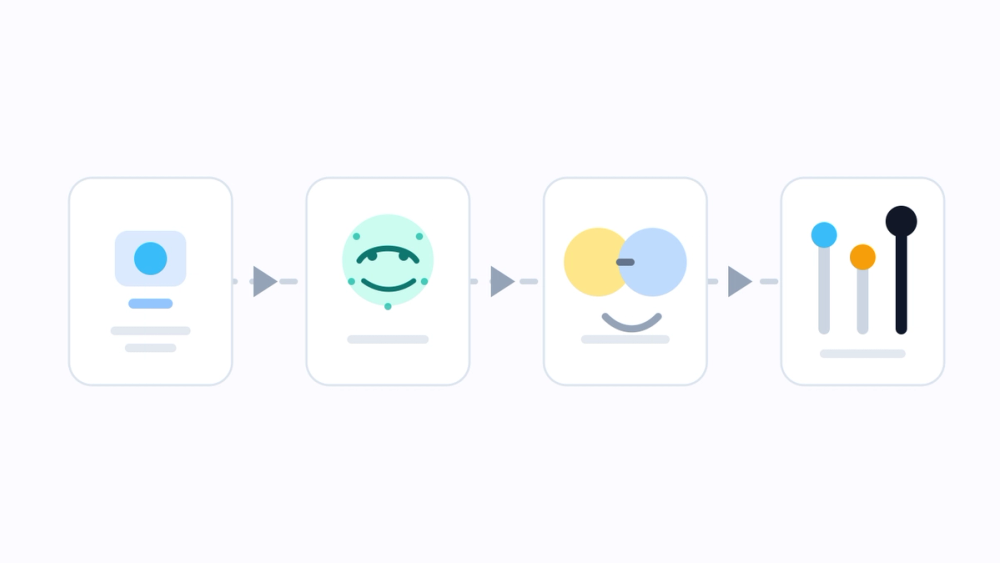
Custom concept image. It explains the public Omoggle flow without reproducing the actual interface.
The public evidence supports a narrow but useful claim: Omoggle is a real live video trend, and the product loop described on its homepage, Terms of Service, and Privacy Policy matches the broad shape now circulating across Twitch and X.
The product facts are the most stable part of the story. Omoggle publicly presents itself as a live 1v1 face-rating arena with an 18+ gate, a camera check that is not legal ID verification, a Solo PSL scan, and a ranked ladder. Its privacy language also gives unusually specific detail about local facial analysis, moderation handling, and the difference between ordinary arena play and separately saved or flagged content.
The viral layer is better read through reporting than through official product copy. Dexerto's May 3 explainer, Dexerto's May 5 Twitch-policy follow-up, and Aftermath's May 6 report all point in the same direction: the format spread because it was easy to stream, easy to clip, and provocative enough to trigger policy debate.
The cleanest reading is this: Omoggle's public docs support the product mechanics, while outside reporting supports the speed and shape of the cultural spike. Some viral claims are still moving faster than primary documentation, so the article sticks to the overlap between official language and public reporting.
Most face-rating apps are lonely. You upload a selfie, get a number, feel weird, close the tab, maybe come back later.
Omoggle changes the emotional surface area. You are not just asking, "How do I look?" You are asking, "Can I beat the person on the other camera while a streamer and chat watch?"
That one shift makes the product far more viral and far more uncomfortable.
Dexerto reported on May 3 that Omoggle had become visible across Twitch, especially through streamer clips and reaction moments. Aftermath reported on May 6 that Omoggle had more than 9,000 concurrent players at the time of writing. Treat that as a media observation, not audited platform data, but the direction of travel was obvious.
Omoggle is built for clipping. A match has a setup, suspense, a verdict, a winner, a loser, and a reaction shot. That is basically short-form video physics.
The policy drama added fuel. Dexerto later reported that Twitch clarified its stance on randomized video chat sites after warnings surfaced around Omoggle streams. Aftermath also framed the moment as Twitch changing its rules while the trend was peaking.
Omoggle's ladder uses looksmaxxing vocabulary: Molecule, Sub3, Low Tier Normie, Mid Tier Normie, High Tier Normie, Chadlite, Chad, and Slayer, according to Dexerto and Aftermath.
That language is not neutral. It comes from a culture where appearance gets compressed into status, hierarchy, and "market value" vocabulary.
For a casual viewer, the terms are absurd. For a vulnerable user, they can land much harder. The joke works because the label feels fake until it is pointed at you.
Media coverage often describes Omoggle as AI face rating. That is understandable, but it is also too blunt.
Omoggle's own privacy policy says it uses MediaPipe WebAssembly for facial landmark tracking and facial analysis. Google's MediaPipe docs describe face landmark models that can detect facial landmarks, output blendshape scores, and work on images or live video feeds.
That is computer vision. It may use machine learning. It is not the same category as a chatbot or generative model.
Aftermath reported that one Omoggle developer pushed back on the "AI" framing in that modern LLM sense. I would describe the product this way: Omoggle is a computer-vision-powered social game that the internet has turned into an AI face-rating story.
Omoggle's public privacy policy is more detailed than I expected.
It says facial scanning and landmark detection run locally on the user's device. It says Omoggle does not store faceprints, facial meshes, or face templates for ordinary arena play. It says live 1v1 video/audio is routed through WebRTC/SFU transport with LiveKit and is not recorded as a stream.
It also says NSFW.js runs in the browser to classify video frames for safety, with only flagged representative frames sent to moderation storage. NSFW.js itself is an open-source client-side detection library, according to its GitHub repository.
That is the privacy-friendly version of the story.
The harder part is that Omoggle is still live random video with strangers. The homepage uses an 18+ acknowledgment, but the terms explicitly say the camera check is not legal ID verification. Dexerto also reported an example involving a streamer being paired with a child, which is exactly the kind of edge case that makes randomized video risky on live platforms.
There is another clause users should read slowly. Omoggle's terms say paid external marketing use of a user's likeness requires separate opt-in. The privacy policy also says match-related content can be used for promotional, editorial, advertising, and platform-marketing purposes on Omoggle properties and Omoggle-operated social channels.
That may be legally structured, but as a user I would treat it as a red flag to actually read the documents before entering a match.
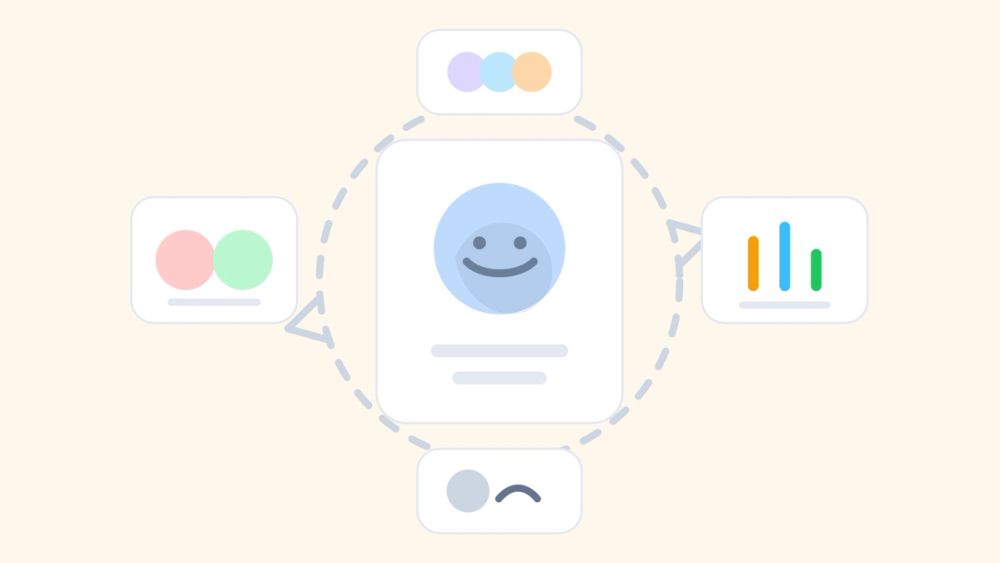
Custom concept image. It represents the social comparison loop rather than a real Omoggle session.
The uncomfortable part is not just that Omoggle judges faces.
The uncomfortable part is that it gives the judgment a stage.
Social platforms have already trained people to optimize their appearance for cameras. Filters, lighting, retakes, angles, gym transformations, and "rate me" communities all prepared the ground. Omoggle compresses that pressure into a real-time match.
TikTok is a useful comparison point. In a November 2024 safety update, TikTok said it would restrict some appearance-altering effects for teens under 18 after research and feedback raised concerns about how those effects shape identity and self-perception.
A 2025 Frontiers in Psychiatry study found that social appearance anxiety and body checking behavior mediated the relationship between social media addiction and depressive symptoms among college students. That does not mean Omoggle causes depression. It does mean public appearance scoring sits inside a well-documented anxiety loop.
So when people ask, "Why is everyone so sensitive about a dumb website?" my answer is simple: because the dumb website is sitting on top of a not-dumb psychological mechanism.
If you build consumer AI products, Omoggle is worth studying even if you hate the premise.
It has three very real product lessons.
First, a model output is not the product. The social loop around the output is the product. A face score by itself is boring. A face score in a ranked, public, reactive match is content.
Second, "AI" is often a perception layer. Users and media may call anything algorithmic "AI" if it feels like a machine is making a judgment. Your documentation needs to be clearer than your marketing, especially when the output touches identity, health, money, credit, hiring, or appearance.
Third, safety copy is not enough when the growth loop invites public humiliation. If your product turns a sensitive trait into entertainment, moderation is not a footer. It is the business.
This is where Omoggle becomes more than a weird Twitch trend. It is a preview of what happens when AI-adjacent evaluation systems become social games.
The takeaway: Omoggle is less a face-rating tool than a distribution lesson in how quickly algorithmic judgment becomes entertainment.
What is Omoggle? Omoggle is a live 1v1 face-rating arena where users enter with a camera, complete an 18+ acknowledgment, get facially analyzed, and compete in ranked matches. Its public homepage describes the loop as camera check, Solo PSL scan, and competitive ladder climbing.
Why is Omoggle trending on Twitch? Omoggle is easy to stream because every match has a clear setup, verdict, and reaction. Dexerto and Aftermath both reported that the platform became visible through Twitch clips, streamer reactions, and Twitch's changing stance on randomized video chat content.
Is Omoggle actually powered by AI? It depends on how loosely you use "AI." Media reports often call it AI face rating, but Omoggle's privacy policy describes MediaPipe facial landmark tracking and analysis. A more precise phrase is computer-vision-powered face-rating game.
Does Omoggle store face data? Omoggle's privacy policy says ordinary arena facial scanning runs locally and that faceprints, facial meshes, and face templates are not stored for regular match play. It also describes exceptions for saved Lab reports, moderation evidence, and flagged safety events, so users should read the policy before playing.
Is Omoggle safe for teens? Omoggle says the live arena is 18+. The concern is that self-attested age gates, random live video, and streamable appearance ranking can still create youth exposure risks. If you are under 18, the correct answer is simple: do not use it.
Discover more AI tools, experiments, and product trends at AIToolHunt.