Newsletter
Join the Community
Subscribe to our newsletter for the latest news and updates
Seed Audio 1.0 is not just another text-to-speech update. ByteDance is pitching it as a way to generate a whole sound scene: voice, ambience, effects, emotion, and timing in the same model. That matters if you build creator tools, game prototypes, ads, podcasts, or localization workflows where sound is normally assembled layer by layer.
This is a public-docs analysis, not a hands-on review. The main facts come from ByteDance Seed's official July 20, 2026 release and BytePlus documentation, with fal.ai used as an independent hosted-provider reference. The charts below are official vendor-reported evaluation images, so I treat them as useful release evidence rather than independently reproduced benchmarks.
Seed Audio 1.0 is ByteDance Seed's scene-level audio creation model for turning a prompt into coordinated speech, sound effects, ambience, and timing cues. ByteDance's July 20, 2026 release says the model is available through BytePlus and can shape character performance, background texture, and sound design together rather than as separate clips (ByteDance Seed). The public page also says current dialogue timing control works at 100 ms intervals, generation can reach up to two minutes in one pass with continuation, and multilingual generation covers 20+ languages. That does not prove every studio use case is solved: the evaluation is vendor-reported, the official post does not publish a full reproducibility harness, and independent access is still easiest through hosted API pages such as fal.ai's Seed Audio 1.0 guide (fal.ai). For builders, the useful change is not prettier voiceover; it is one model treating voice, scene context, and timing as a single creative object.
The strongest public delta is workflow shape. Seed Audio 1.0 asks for scene intent, not just a sentence to synthesize.
The second delta is timing. If you are building a video editor, ad tool, or game dialogue pipeline, 100 ms dialogue timing control is more useful than another generic "natural voice" claim. It means the model can be evaluated against cuts, captions, and scripted beats.
The third delta is the evidence boundary. ByteDance reports availability and quality rates across scenarios, plus multilingual MOS results, but these are vendor-reported charts from the release post. They are useful signals, not independent lab proof.
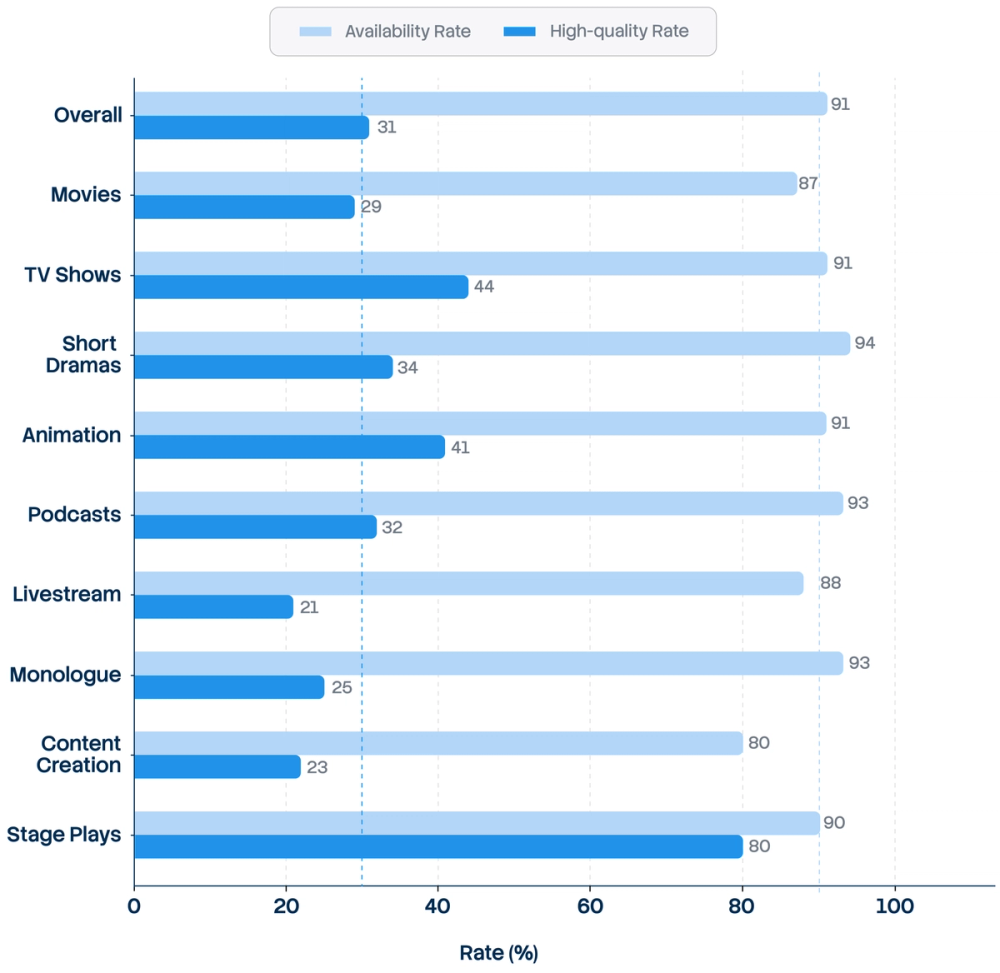
Source: ByteDance Seed's July 20, 2026 Seed Audio 1.0 release. The chart is vendor-reported and should be read with the release's own evaluation boundary (ByteDance Seed).
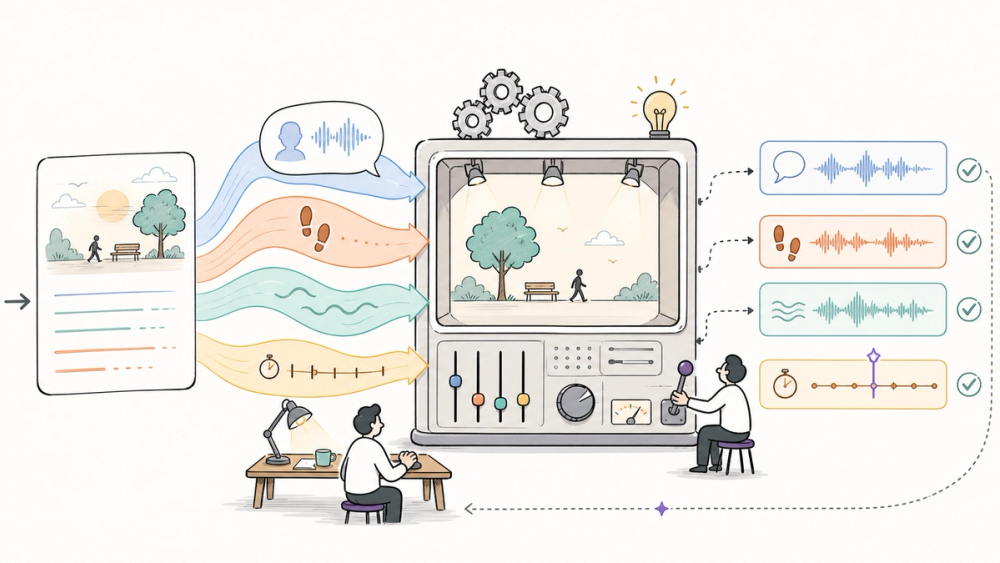
ByteDance describes Seed Audio 1.0 as a unified generation framework. In plain English: one layer interprets the scene, and another layer renders the sound.
The official post says a language model helps structure creative intent into controls such as character, emotion, timing, and scene context. A diffusion-based acoustic generator then produces the final audio in a latent space designed to preserve detail while staying controllable by those semantic instructions (ByteDance Seed).
That architecture choice is why the product story is bigger than TTS. A normal TTS system turns text into speech. Seed Audio 1.0 is trying to model how the speech sits inside a place: the pause before a line, the background bed, the footstep or alarm, and the emotional shape of the moment.
For developers, the most practical question is not whether the demo sounds good. It is whether the model can become a reliable unit inside a tool.
BytePlus now lists a Seed Audio 1.0 API reference (BytePlus), and fal.ai has independent hosted workflow documentation for using Seed Audio from its platform (fal.ai). fal.ai also compares Seed Audio 1.0 with ElevenLabs v3 for creator use cases and reports provider-side pricing that should be rechecked before production planning (fal.ai).
My take: test it first where exact timing matters but full music production does not. Short ads, game dialogue stubs, localization previews, podcast intros, and storyboarding clips are better early targets than finished film mixes.
For normal users, Seed Audio 1.0 is interesting because it moves audio generation closer to how people describe scenes. You can ask for a mood, a speaker, a room, and timed events in one instruction instead of juggling separate voice, Foley, and ambience tools.
But I would not treat it as a replacement for an editor yet. The official release still talks about improving fine-grained control for more sound elements, longer form generation, multitrack work, and future video-reference inputs (ByteDance Seed). That is a roadmap, not a shipped guarantee.
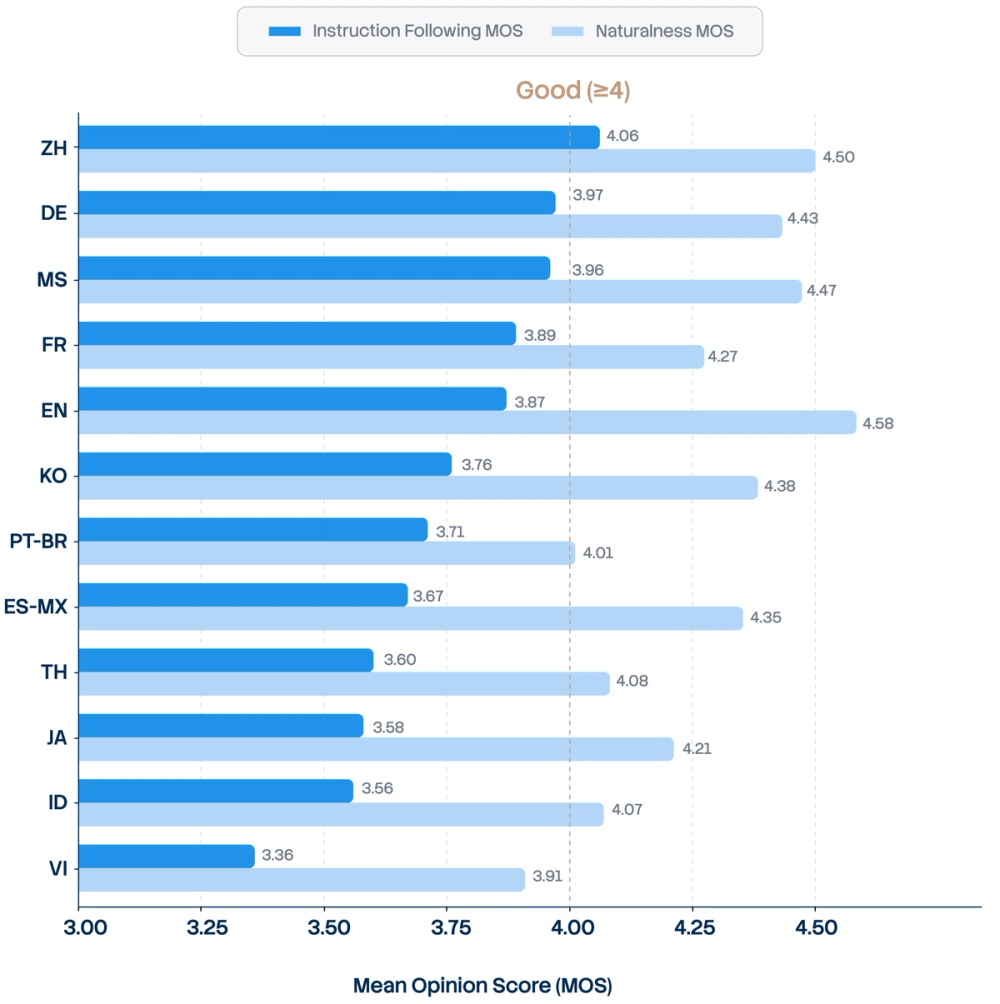
Source: ByteDance Seed's multilingual evaluation chart. It supports the vendor's public claim about cross-language naturalness, but it is not an independent benchmark (ByteDance Seed).
The practical decision is simple: try Seed Audio 1.0 if you already have scene-shaped audio pain. Wait if you only need ordinary narration, strict enterprise controls, or independently replicated quality numbers.
The biggest missing piece is independent evaluation. ByteDance gives public charts, but not a full harness that lets outsiders reproduce the exact availability, high-quality, or MOS results.
The second gap is production rights. The official post mentions authorized reference samples, which is the right direction, but teams still need their own policy for consent, storage, revocation, and commercial use.
The third gap is long-form control. The model can generate up to two minutes in one pass and continue beyond that, according to ByteDance, but long scenes create harder problems: memory, consistency, pacing, edits, and mix decisions.
Seed Audio 1.0 is worth a serious test if your audio workflow is already scene-shaped. If you only need clean narration, it may be more model than you need today.
What is Seed Audio 1.0? Seed Audio 1.0 is ByteDance Seed's scene-level AI audio model. It can generate speech, ambience, sound effects, and timing cues from prompt instructions, according to the official July 20, 2026 release.
Is Seed Audio 1.0 available now? ByteDance says Seed Audio 1.0 is available through BytePlus. Developers should confirm account access, regional availability, current API limits, and pricing directly on BytePlus or their chosen hosted provider before planning production work.
How is Seed Audio 1.0 different from normal text-to-speech? Normal TTS focuses on turning text into a voice track. Seed Audio 1.0 is designed around scenes, so the prompt can include speaker intent, background ambience, sound cues, emotional delivery, and timing together.
What should developers know before using Seed Audio 1.0? Treat the official evaluation as vendor-reported. Build a small test set with your own scripts, languages, timing constraints, and reference-voice consent rules before connecting it to customer-facing production workflows.
What is still unverified about Seed Audio 1.0? Independent benchmark replication, long-form consistency, exact commercial rights around reference voices, and the reliability of multitrack or video-reference workflows remain unclear from the public release.
Discover practical AI products and emerging tools at AIToolHunt.