Newsletter
Join the Community
Subscribe to our newsletter for the latest news and updates
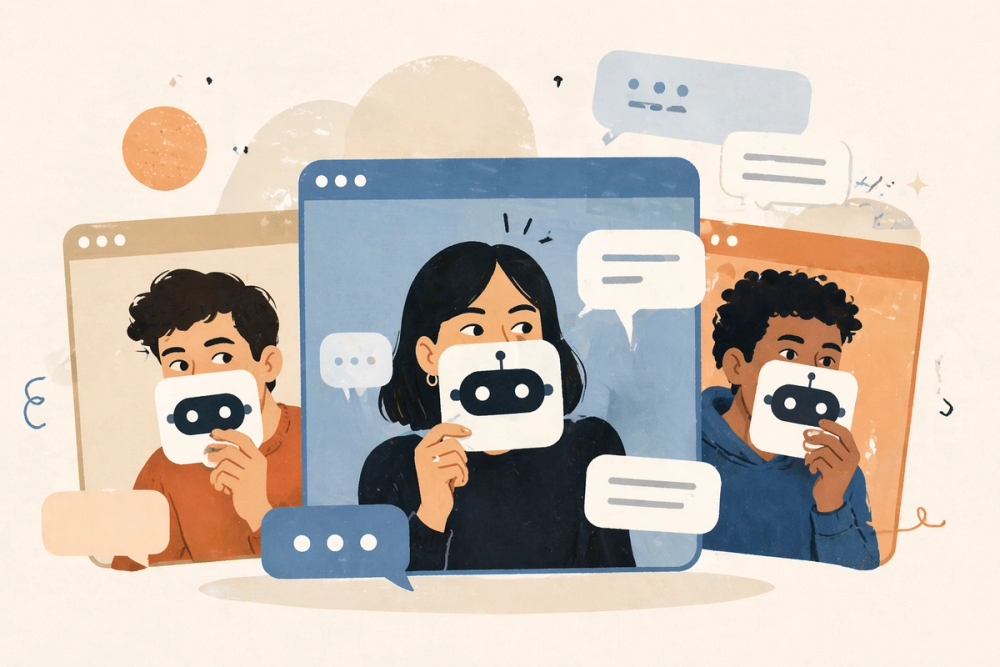
AI-generated editorial illustration for this article. Not an official game asset or screenshot.
The funniest your-ai-slop-bores story of 2026 is not really an AI product.
Your AI Slop Bores Me is a browser-based social experiment where humans pretend to be chatbots. You submit a prompt, another person gets a short timer, and the result is usually part fake ChatGPT, part group chat chaos, part reminder that the internet is still better when real people are in the loop.
That is why it worked.
For founders, marketers, and AI tool builders, the lesson is not "AI is over." It is sharper than that: people are tired of content that sounds optimized but feels empty. Your AI Slop Bores Me turned that fatigue into a game.
Your AI Slop Bores Me is a viral web game and social experiment built around a simple role reversal: instead of asking an AI to answer a prompt, you ask a random human to answer while pretending to be an AI.
According to Know Your Meme, the site is hosted at youraislopbores.me, was built by Mihir Maroju, and went viral in early March 2026 after users started sharing screenshots of the game online. Tom's Guide described the experience as a mix of ChatGPT, Reddit, and an old-school game show.
The premise is intentionally dumb in the best way. Players write or draw under pressure, trying to produce something that feels like low-grade machine output. The humor comes from the gap between what AI sounds like, what humans think AI sounds like, and what happens when a real person panics under a timer.
In one line: it is AI detection flipped inside out.
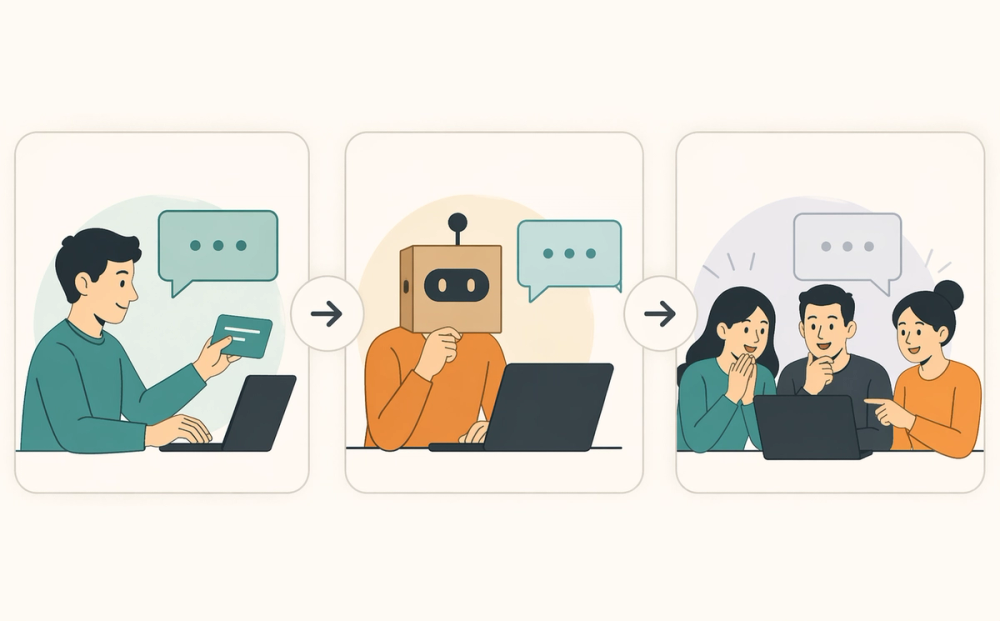
AI-generated workflow illustration. It explains the human-as-AI loop without claiming to show the actual game UI.
I treated this as a news blog and culture explainer, not a hands-on product review.
I checked the public game pages and code of conduct, then cross-referenced coverage from Know Your Meme, NPR/The Public's Radio, and Tom's Guide. I looked for three things: what the product actually does, why the meme spread, and what the trend says about AI-generated content fatigue.
I avoided using unverified clone-site claims as primary facts. Where traffic numbers are mentioned, they are attributed to reporting rather than presented as audited platform data.
Most "AI slop" criticism stays abstract. People complain about spammy search results, generic LinkedIn posts, plastic-looking images, and videos that feel mass-produced by a machine nobody asked for.
Your AI Slop Bores Me made that frustration interactive.
Instead of writing another thread about how bad AI content has become, you get to perform the badness. You can imitate the vague helpfulness, the hollow confidence, the odd refusal style, the weird over-explaining. It is funny because everyone recognizes the voice.
That recognition is the product.
The site only works because AI writing now has a cultural fingerprint.
People know the rhythm: "Certainly," followed by a tidy list; a fake-neutral tone; a paragraph that says everything and nothing; an answer that sounds polite while dodging the actual question. Your AI Slop Bores Me turns that shared literacy into a party trick.
NPR's April 2026 coverage reported that the site had already drawn more than 25 million unique visitors and nearly 280 million total hits, based on comments from Maroju. Treat those numbers as reported figures, not audited analytics, but the signal is obvious: people did not need much onboarding.
They already knew the joke.
A lot of AI backlash content feels like homework. This does not.
The game is critical of slop, but it is not a policy paper. It lets users laugh at AI habits while still admitting the uncomfortable truth: we have all internalized the chatbot voice. The best rounds are not angry. They are specific, messy, and weirdly human.
That matters for product builders. If your critique of AI feels preachy, people scroll past it. If your critique becomes a game loop, people bring their friends.
AI products usually sell polish. Your AI Slop Bores Me sells bad timing, shaky drawings, awkward phrasing, and the feeling that another person is trying to be funny in real time.
That is not a bug. It is the reason the experience lands.
Tom's Guide noted that the site feels surprisingly honest because the "AI" response is actually coming from another person. NPR framed it as light relief in a bot-heavy internet. Both descriptions point to the same insight: people miss the texture of human presence online.
Not perfect human presence. Real human presence.
The phrase "your AI slop bores me" already worked as a reaction image before the game took off. Know Your Meme traces the catchphrase to a 2025 reaction meme used to criticize AI-generated posts.
The site did something smart: it did not just explain the meme. It gave the meme a place to happen.
That is the difference between a landing page and a cultural object. A landing page tells you why something matters. A cultural object lets you participate before you fully understand why you care.
Here is the part AI companies should probably not ignore: the backlash is not just about AI existing. It is about sameness.
People are not bored because a model helped someone write faster. They are bored because too much AI-assisted content arrives with the same posture: polished, generic, frictionless, and emotionally vacant.
That creates a product opportunity.
The next wave of useful AI tools will not win by sounding more like AI. They will win by helping teams preserve taste, context, voice, and judgment. The boring part of content production can be automated. The point of view cannot be.
If your product removes all human texture, Your AI Slop Bores Me is not just a funny game. It is market feedback.
The takeaway is simple: AI culture has entered the parody stage. That usually happens when a technology is no longer niche. Everyone understands it well enough to mock it.
What is Your AI Slop Bores Me? Your AI Slop Bores Me is a viral browser game where users submit prompts and other humans answer while pretending to be AI chatbots. The joke is that the "AI" is not a model. It is a person trying to imitate generic machine output under pressure.
Who created Your AI Slop Bores Me? Multiple reports, including Know Your Meme and Tom's Guide, identify developer Mihir Maroju as the creator. Know Your Meme says the site launched and went viral in early March 2026.
Is Your AI Slop Bores Me actually powered by AI? The public concept is built around humans roleplaying as AI. NPR described it as a fake AI chatbot where responses come from other people rather than an algorithm.
Why did the game go viral? It connected a familiar frustration with a simple game loop. People already understood "AI slop" as a complaint about generic machine-made content. The game made that complaint funny, social, and easy to share.
What should AI teams learn from it? Generic output has become culturally legible. If your product makes every brand, creator, or team sound the same, users will notice. The defensible layer is not just speed. It is taste, context, and human judgment.
Discover more AI tools, experiments, and product trends at AIToolHunt.